
What Awaits the Transfer Printing Sector in 2026? The 5 Rising Trends and Opportunities
In the world of textile printing, the rules are being rewritten. Radical shifts in consumer demand, the pressure for sustainability, and unstoppable technological momentum aren’t just evolving the industry on the road to 2026—they’re starting a revolution. As a manufacturer, designer, or brand, are you ready for this future?
Here are the 5 critical trends that will fundamentally change the transfer printing sector and that you need to prepare for starting now.
1. The Pinnacle of Digital Transformation: Smart & Tactile Printing
Digitalization no longer just means “getting a print”; it means “creating an experience.”
Nano-Printing Technologies and 3D Effects High resolution (1440 dpi and up) is no longer a luxury; it’s the standard. The real revolution is coming from micro-capsule inks; this technology creates tangible, tactile surfaces that can be felt on the fabric. With 3D transfer printing (e.g., embossed team logos) added to traditional textiles, printing is moving from two dimensions to three.

AI-Powered Color Management AI-based software isn’t just “guessing” anymore. Real-time Pantone matching and “live color simulation” will make it possible to see the final result with 99% accuracy before customer approval. This means weeks of sampling processes and their associated costs will become history.
2. The Non-Negotiable: Radical Sustainability & Circular Production
Sustainability is no longer a marketing slogan; it’s a license to produce. In 2026, brands that aren’t “green” will be out of the game.
Biodegradable Transfer Films Existing PVC-based films are being replaced by corn-starch-based films, which leave a carbon footprint up to 60% smaller. Water-soluble adhesive powders and non-toxic inks will form the foundation of ecological printing.
Closed-Loop and “Zero Waste” Systems Brands will no longer just seek a supplier who “prints,” but one who “manages their waste.” “Zero Waste Certified Printing” models, where waste ink and films are recycled in-house, will be a primary demand from the Generation Z consumer.
3. The Age of Hyper-Personalization: The Power of the “1 Piece” Order
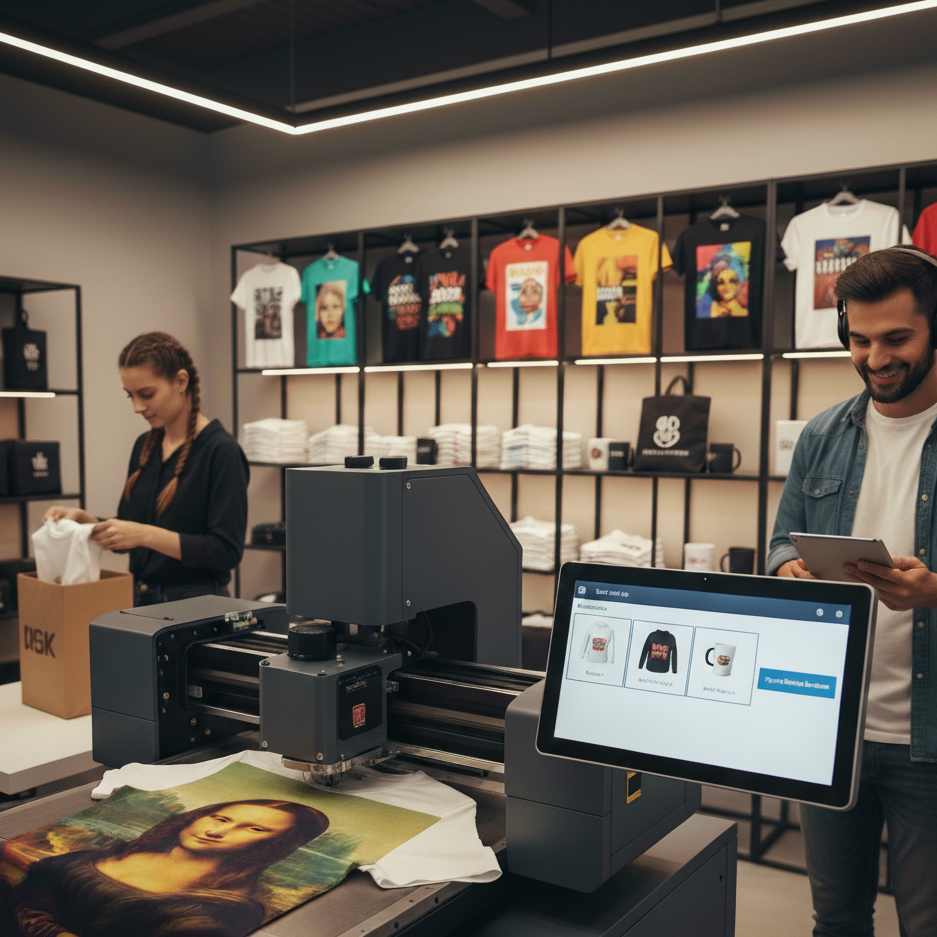
The “one-size-fits-all” era is over. 2026 will be the year of transition from mass production to mass personalization.
NFT-Integrated and QR-Coded Prints A print is no longer just a design; it’s an identity carrier. Blockchain-verified “limited edition” textiles will give apparel a digital certificate of authenticity. A simple QR code will carry the product’s entire production story to the consumer’s phone.
Mobile Design Studios Customers will be able to create their own designs via phone apps and place a “1 piece” print order in seconds. Suppliers will have to manage these micro-orders profitably.
4. Beyond Fabric: The Functional Print Revolution
Printing is no longer just about “looking” good; it’s about “doing” something—it must be functional. The rules are changing, especially in performance wear.
Smart Inks: Heat and Environmental Sensitivity Prints that change color based on ambient temperature (thermochromic) or hidden patterns that appear with sweat during a workout (hydrochromic) are becoming standard. The print adds an intelligent feature to the fabric.
Wearable Tech and Conductive Inks Conductive inks compatible with wearable technology are turning textiles into an interface. Adding touch-control to printed areas will take smart jackets and athletic wear to the next level.
5. The Logistics & Supply Chain Revolution: The Rise of “Local”
Post-pandemic and rising shipping costs, combined with a consumer who wants it “right now,” are reshaping the supply chain.
Regional Micro-Printing Hubs Major brands are beginning to establish “Regional Micro-Printing Hubs” to reduce inventory costs and dependence on the Far East. This is a model where an order is printed locally and delivered in 24 hours, rather than traveling thousands of miles. This model has the potential to cut shipping costs by up to 40%.
Don’t Follow the Trends, Set Them: PridgeTex’s 2026 Vision
Waiting for the future is an option. For PridgeTex, it’s a matter of planning.
The trends analyzed in this article aren’t “news” to us; they are the “to-do list” for our R&D lab. We use our 20 years of experience to develop the technologies of tomorrow, not just today.
Whether you’re looking for biodegradable film made from corn starch, functional inks that change color during a workout, or a 3D embossed effect for your logo…
Don’t just get ready for the future. Get ready for Eva Transfer. We are already there.
Schedule an R&D meeting with our expert team to integrate the print technologies of the future into your project today.